THE BEST EVIDENCE TENDS TO GET THE FACTS RIGHT

by Stephen Mumford, Better Evidence for a Better Healthcare Manifesto

Science is a normative enterprise, it should be acknowledged, and this applies just as much to medical research. We need to know how empirical knowledge should be gathered. What methods and techniques should we employ in order for our results to be considered scientific? Indeed, we can think of the term ‘scientific’ as an honorific bestowed upon certain claims when they have been discovered and substantiated in the right way. It is plausible that science is actually constituted by the set of norms for its proper conduct. Continue reading “THE BEST EVIDENCE TENDS TO GET THE FACTS RIGHT”

EXPERTISE IS MORE THAN AUTHORITY

by Samantha Copeland, Better Evidence for Better Healthcare Manifesto

One of the key criticisms of the EBM movement as it has taken shape is that the hierarchies the movement has embraced have placed clinical expertise and localized knowledge at their bottom. This was a reaction to one of EBM’s general aims, to move medicine away from the old habit of simply following authority and into a new era of using good evidence to guide medical decisions. But clinical expertise and blindly following or expressing authority are not the same thing, and I and others think it has been a mistake of EBM to take that assumption and run with it into the arms of the RCT. Continue reading “EXPERTISE IS MORE THAN AUTHORITY”

What Evidence? Reflections on Better Evidence for Better Healthcare

by Rani Lill Anjum, Better Evidence for Better Healthcare Manifesto

CauseHealth offers a new ontological foundation for medicine, what we call Causal Dispositionalism (Mumford and Anjum 2011). From this perspective, better evidence would mean evidence of causation, understood as something tendential and intrinsic. Specifically, better evidence of causation would involve theoretical understanding of how and why an intervention brings about a certain effect. But we should try to develop this understanding to also include how various factors interact, for instance, what could counteract the effect, what could enforce it and what else is causally relevant for the outcome. Continue reading “What Evidence? Reflections on Better Evidence for Better Healthcare”

Better Evidence for Better Healthcare Manifesto: the CauseHealth Perspective.

The “Better Evidence for Better Healthcare Manifesto” initiative was recently launched by the Oxford Centre for Evidence Based Medicine (CEBM) in collaboration with the British Medical Journal (BMJ).

The manifesto is motivated by a series of problems and blind spots in the implementation of EBM: lack of high quality evidence, systematic research errors, under-reporting of harm, insufficient inclusion of patient’s priorities are some of the issues named by the Manifesto’s promoters. The purpose of the initiative is to spot what could be changed and how, in order to improve the current situation. Continue reading “Better Evidence for Better Healthcare Manifesto: the CauseHealth Perspective.”

Evidence synthesis in pharmacology

By Elena Rocca

Pharmacology is a complex science that aims to balance harm and benefit of treatments for the individual patient. How should different types of evidence be synthesised in order to optimize this task? Should evidence from randomized trials be prioritized over other evidence, following the EBM model? If not, how can different types of evidence be amalgamated in an alternative way? Continue reading “Evidence synthesis in pharmacology”

What is the form of causation in health and disease, and intervention?

By David Evans

In a paper with a very long title, recently published in Medicine Health Care and Philosophy, Roger Kerry, Nic Lucas and I set out some ideas about how causation applies to relationships between health and disease. In particular, we focused on how treatment (intervention) might act to limit disease and restore health. Continue reading “What is the form of causation in health and disease, and intervention?”

Thinking about guidelines

clock-lion
National Geographic Wild, Trafalgar Square in London, January 28, 2016.

On October 24, 2016, the CauseHealth crowd met with a small group of other philosophers, healthcare practitioners, and members of the guidelines community. We had a rousing discussion that lasted the whole day, with few pauses and enthusiastic participation from all in attendance. We talked about several issues with how guidelines are developed and implemented and how we thought philosophy could be relevant in solving those issues.

It is difficult to summarize the discussion in a few words—the topics were wide-ranging and participants shared complex ideas from multiple perspectives. I’m going to highlight here some of the themes that came up more than once, and to give an idea of where the group thought the discussion should go next.

Read more of Samantha’s review of the workshop
Read Rani on Real v. Ideal Guidelines
Read Elena on How Decisions are Made
Read Karin on the Ethics of Reduction
Read Stephen on the Notion of Guideline
Read Roger on the Challenges to Come
Read Fiona on Guidelines in Situ
Read Sarah on Truth, Simplicity and Personalization
Read Anna Luise on Challenging Multi-Morbidity
Read Stephen on Standards for Regulation
Read Samantha on Analogies and High-Stakes Inferences
Continue reading “Thinking about guidelines”

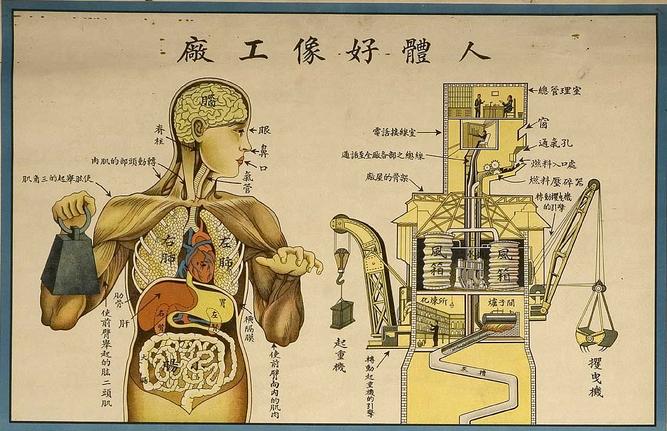
Reductionism isn’t enough for public health

humanmachine2
Chinese medical poster, 1933 (ref US NLM; image source here)

By Håkon Boman Andresen

The overarching goal of the public health sciences is to increase the population’s health. Society spends a lot of money each year on health research, which again is used to develop public policies and guidelines. However, is this causing the population to have better health? Continue reading “Reductionism isn’t enough for public health”

New article by CauseHealth collaborator Roger Kerry

Capture

by Elena Rocca

Our friend and collaborator Roger Kerry co-authored the article “Time, space and form: Necessary for causation in health, disease and intervention?” published in this month’s issue of the journal Medicine, Health Care and Philosophy. Continue reading “New article by CauseHealth collaborator Roger Kerry”