A digital CauseHealth course for health professionals

Photo credits: UMC – WHO Uppsala Monitoring Centre

We, Elena Rocca and Rani Lill Anjum, are now debating whether to establish a new CauseHealth teaching course. The course would be directed at health professionals and others who might be interested in learning more about causality, complexity and evidence for health sciences from a philosophy of science perspective.

In the last years, we have both been teaching and presenting CauseHealth material to various health professionals, but we think the time is right to offer something more structured, available, flexible and predictable.

Course themes could include (but please suggest more):

  • Philosophical bias (basic implicit assumptions) in health sciences and how they influence healthcare practice
  • The clinical squeeze between populations and the unique individual
  • Complexity, reductionism, and the biomedical model
  • Risk and safety as statistical frequencies or individual propensities
  • Ontological and epistemological tensions between evidence based and person centered practice
  • Why one size does not fit all in healthcare
  • Other ideas?

Possible formats could be (but please suggest other):

  • Digitally available course material + 2 or 3 weekends or evenings with online lectures and group discussions (3 hours each)
  • An offer of smaller modules where one can choose one or more micro-courses (4 hours each, plus some reading and preparations)
  • An intensive course that runs over 3 days
  • A flexible course that runs over 3 months
  • Other alternatives?

We would love to hear from you if you think this could be interesting, and what content and formats could be more suitable or relevant.

When it comes to expected costs, Norwegian continuous education is not very expensive, since the norm is that education is free of charge. But for continuous education, a fee of 400-700 Euros would be quite standard, since the universities will have to cover the expenses for course administration and teaching.

Access to all course material (articles, books, etc.) would be open access or included in the fee.

CauseHealth goes to Evidence Live

Evidence-live-2-date

Evidence Live is an annual conference, jointly hosted by the Centre for Evidence-Based Medicine, University of Oxford and The BMJ. This year, CauseHealth was represented in two of the sessions, by Elena Rocca and Rani Lill Anjum. Continue reading “CauseHealth goes to Evidence Live”

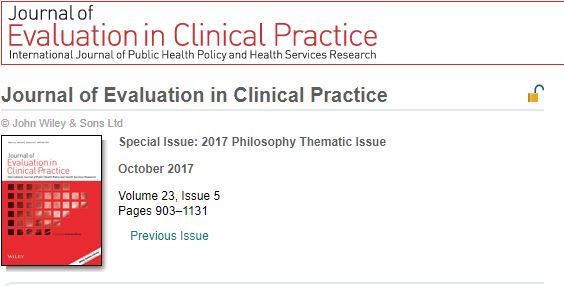
CauseHealth workshop N=1 is now a section in JECP special issue.

Capture

The Journal of Evaluation in Clinical Practice has dedicated a section of its latest special issue to collect seven contributions which were previously presented in the CauseHealth workshop N=1. A further contribution from the same workshop was published by the same journal last year. Continue reading “CauseHealth workshop N=1 is now a section in JECP special issue.”

What is the Guidelines Challenge?

Rani Lill Anjum

CauseHealth recently organised a conference in Oxford called The Guidelines Challenge: Philosophy, Practice, Policy.

For those who missed the event, podcasts of the talks are available on our YouTube channel, and there is also a summary from each of the two days on Storify (day 1, day 2). There is also a Twitter hashtag, #GuidelinesChallenge.
Continue reading “What is the Guidelines Challenge?”

Thinking about guidelines

clock-lion
National Geographic Wild, Trafalgar Square in London, January 28, 2016.

On October 24, 2016, the CauseHealth crowd met with a small group of other philosophers, healthcare practitioners, and members of the guidelines community. We had a rousing discussion that lasted the whole day, with few pauses and enthusiastic participation from all in attendance. We talked about several issues with how guidelines are developed and implemented and how we thought philosophy could be relevant in solving those issues.

It is difficult to summarize the discussion in a few words—the topics were wide-ranging and participants shared complex ideas from multiple perspectives. I’m going to highlight here some of the themes that came up more than once, and to give an idea of where the group thought the discussion should go next.

Read more of Samantha’s review of the workshop
Read Rani on Real v. Ideal Guidelines
Read Elena on How Decisions are Made
Read Karin on the Ethics of Reduction
Read Stephen on the Notion of Guideline
Read Roger on the Challenges to Come
Read Fiona on Guidelines in Situ
Read Sarah on Truth, Simplicity and Personalization
Read Anna Luise on Challenging Multi-Morbidity
Read Stephen on Standards for Regulation
Read Samantha on Analogies and High-Stakes Inferences
Continue reading “Thinking about guidelines”

PhD thesis on serendipity wins award

Samantha Marie Copeland

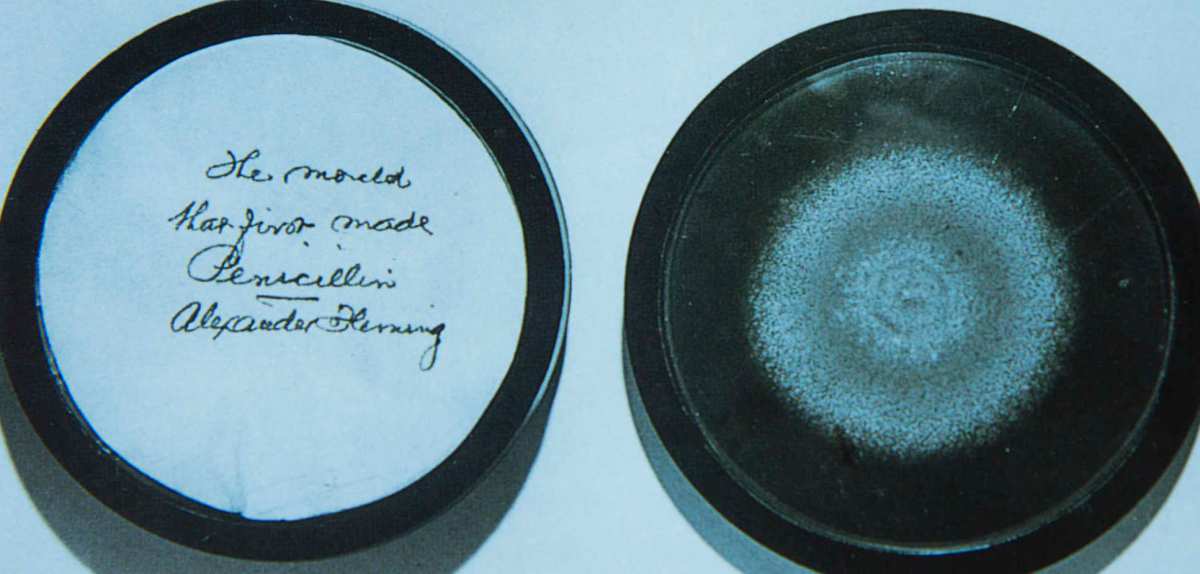
Philosopher and CauseHealth Postdoc, Samantha Copeland, has won one of two Best Thesis Awards from Dalhousie University for her doctoral thesis The Case of the Triggered Memory: Serendipitous Discovery and the Ethics of Clinical Research. She has also been selected as their nominee for the Canadian Association for Graduate Studies Distinguished Dissertation Award in Fine Arts, Humanities and Social Sciences for 2016. Congratulations! Read more about her work on serendipity and get the full text version of the thesis.

Metaphysics in Science – It’s there whether we like it or not

Fredrik UMB-031283
Fredrik Andersen is PhD-student at NMBU and a CauseHealth collaborator

There is metaphysics in science, but not everyone acknowledges this. A recent paper by Fredrik Andersen and Jonas R. Becker Arenhart, published in Metaphilosophy, argues that Physics is no exception and that all successful scientific research presupposes metaphysics. Continue reading “Metaphysics in Science – It’s there whether we like it or not”

What is science and why do health professionals need to know?

by Rani Lill Anjum

On Monday 23rd November, Stephen Mumford and Roger Kerry gave a two-part lecture at the Council for Allied Health Professions Research London Hub – Evening Lecture. The topic was ‘What is Science and Why do Health Professionals Need to Know?’. Handouts and a podcast from the event are available here. Continue reading “What is science and why do health professionals need to know?”