

By Keith Meadows and Matt Reaney
For many years psychologists and other social scientists have been pushing for the individual patient’s perspective – priorities, needs, feelings and functioning – to be incorporated into drug development. This is usually achieved through the use of patient-reported outcome measures (PROMs) in clinical trials. The development and use of PROMs situates them at the vertex of two very different trends in medicine: patient-centred care and standardization. Indeed the application of PROMs – which pull in the direction of standardisation – results in a narrow conception of evidence by overriding the subjectivity of individual experiences, beliefs and judgments. Without additional context, PROM data cannot easily support individual patient-level care. When collected systematically and with an interpretive phenomenological approach, narrative data can contain valuable information about the patient experience that numerical ratings from PRO measures do not capture.
Continue reading “Bringing the patient’s perspectives forward in drug development and healthcare evaluation”
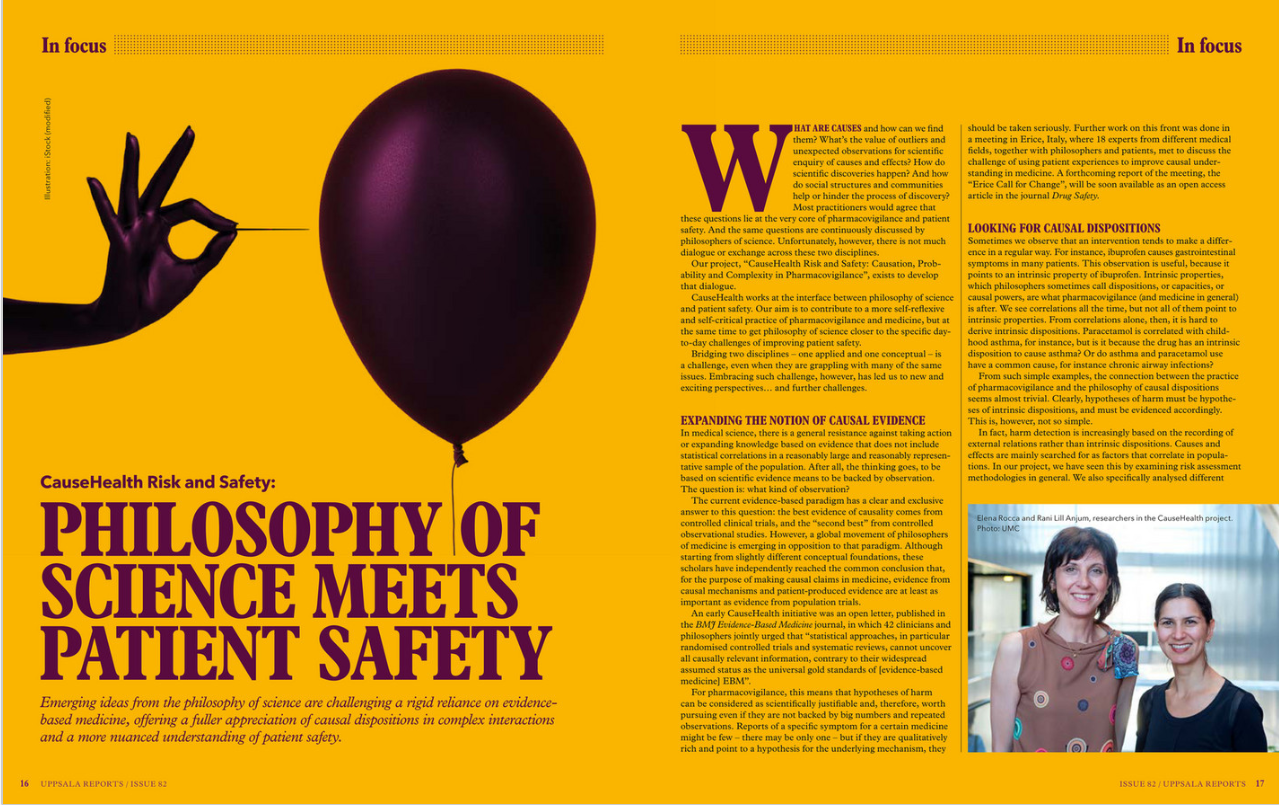 The magazine Uppsala Reports, which disseminates globally the updates from UMC and the WHO Programme for International Drug Monitoring since 1996, has dedicated the cover of its 82nd issue to our project, CauseHealth Risk and Safety.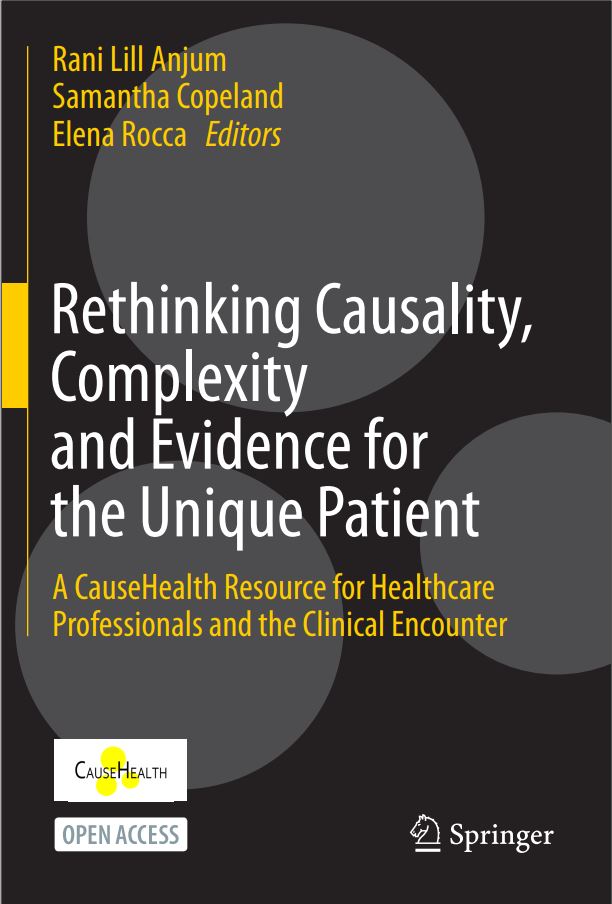


 Technology should make our life better, easier and safer. And yet, medicines, pesticides, nanotechnologies, biotechnologies et cetera, may represent a potential threat to health and environment. Some of the new technologies might be safe for most, but they could still be harmful for vulnerable individuals, communities or ecosystems.
 Causality, Complexity and Evidence in Health Sciences