A philosophical conundrum at the heart of the cranial debate: as explained by Professor Stephen Tyreman

osteofm's avatarosteofm

A reminder of the great mind and gentle humanity of Stephen Tyreman.  I was honoured to be sent this to publish on the blog, and hope that through writings such as this, he can continue to enlighten and inform us.  He wrote it in response to a piece by Monica Noy on “cognitive dissonance”.


______________________________________________

Cranial Concept, Reality and Perception

Thanks Monica for this honest and thought-provoking piece and also to Penny for drawing my attention to Monica’s thoughts.  It takes a lot of courage to speak out against the prevailing assumptions, practices and mores of any group and particularly of osteopathy which continues to be defensive and therefore somewhat ‘touchy’ about its identity and status in respect to other parts of healthcare.

I suppose I’m a bit closer to Penny’s view on the cranial concept, which is that while the theoretical ‘foundation’ of cranial work is very suspect with…

View original post 3,137 more words

A personal reflection on person-centred care and the role of stories in healthcare


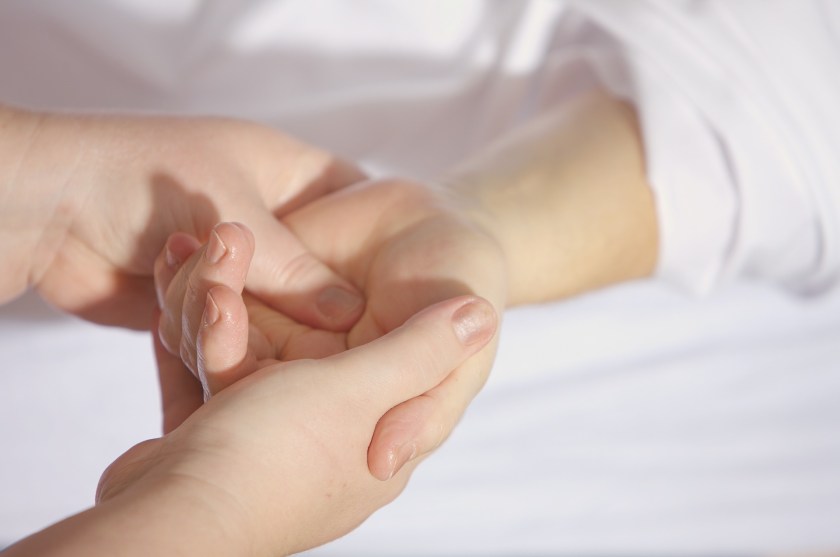
treatment-1327811_1920

by Stephen Tyreman

This is an extract from a recent article written by Stephen Tyreman for the International Journal of Osteopathic Medicine. The full text can be found here.

Understanding what person-centred means is much more complex and multi-factorial than I once assumed. It is not merely a question of considering a person’s individual needs and concerns and putting them first. It is recognising that human beings face up to the challenge of illness, pain and disability differently from how we might understand and seek to correct a fault in a car, say. Continue reading “A personal reflection on person-centred care and the role of stories in healthcare”

New research collaboration between Uppsala Monitoring Centre and CauseHealth

IMG_3676
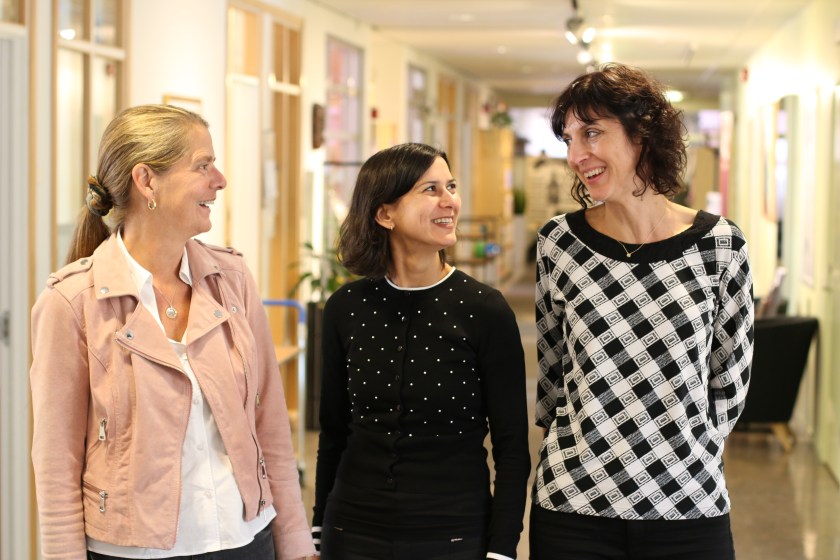
UMC Director Marie Lindquist with Rani Anjum and Elena Rocca. Photo: UMC

At 1 October 2018, a new collaborative research project started at NMBU that brings CauseHealth into its second phase; of CauseHealth pharmacovigilance. Continue reading “New research collaboration between Uppsala Monitoring Centre and CauseHealth”

CAUSAL DISPOSITIONS IN RISK ANALYSIS

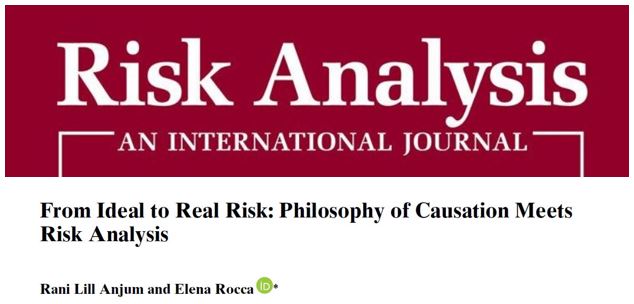
Capture 3Technology should make our life better, easier and safer. And yet, medicines, pesticides, nanotechnologies, biotechnologies et cetera, may represent a potential threat to health and environment. Some of the new technologies might be safe for most, but they could still be harmful for vulnerable individuals, communities or ecosystems. Continue reading “CAUSAL DISPOSITIONS IN RISK ANALYSIS”

Managing Complexity In Musculoskeletal Conditions: Reflections From A Physiotherapist

In this blog (and linked article), physiotherapist Matt Low explains how he uses patient narratives, mind-maps and the vector model of causation to help his patients. The result is a person-centered approach that emphasises causal complexity, individual context and the idea that at least some of the causes of pain can be counteracted and thus controlled by the patient. Matt is a collaborator of CauseHealth and this is his second article describing his unique approach to chronic pain.

Matthew Low's avatarPerspectives on Physiotherapy

I was fortunate enough to have been invited by Physio First to contribute to their journal ‘In Touch’ and I chose to write about managing complexity with the different types of ‘evidence’ that we deal with in a healthcare setting.

This is an area of interest for me and I still grapple with many areas of clinical practice.  These include balancing the normative and narrative examination, evaluating and weighting the evidence appropriately for the person seeking care in front of me and also reconciling and communicating the reasoning process within a person centred framework.  Clearly, this is work in progress and I hope this reflective piece demonstrates a movement in this direction.

I hope this paper is informative and useful in that it shares some of my deliberations, thoughts and perspectives in clinical care.

Many thanks to Physio First http://www.physiofirst.org.uk/ for giving me the opportunity to share this.

Managing complexity…

View original post 19 more words

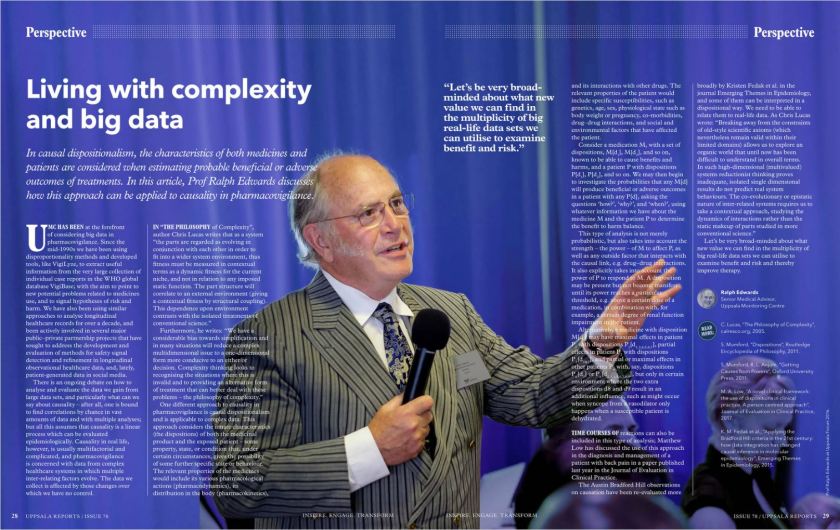
Living with complexity and big data. Causal dispositionalim enters pharmacovigilance

Ralph Edwards on dispositionalism in pharmacovigilance

We have seen a lot of interest in the CauseHealth approach and issues during these last years, especially among clinicians who see a need for a more person centered healthcare. Can this be useful also outside the clinic? Yes, according to senior medical advisor at the WHO Uppsala Monitoring Center for Drug Safety, Ralph Edwards. In a recent perspectives article in the UMC report, he argues that dispositionalism can be useful for dealing with complexity, individual variation and the patient’s unique context. Continue reading “Living with complexity and big data. Causal dispositionalim enters pharmacovigilance”

DATA AND THEORY: NEW CAUSEHEALTH PAPER ABOUT THE PROBLEM OF WEIGHING COMPLEX EVIDENCE IN MEDICINE.

by Elena Rocca

data

In the early 19th century, the Hungarian physician Ignaz Semmelweis noticed from his clinical experience that antiseptic routines in healthcare reduced infections at childbirth. After carrying out some studies on the matter, he proposed that the practice of disinfecting hands in the obstetrician ward of the Vienna General Hospital, where he worked at the time, would have reduced the incidence of puerperal fever. However, for that time this seemed as an implausible suggestion.  The germ theory of disease was still unheard of (Pasteur developed such theory only some decades later), and therefore there was no accepted understanding of how disease could be transmitted from one organism to the other. Semmelweis suggestion was therefore rejected by the medical community. Continue reading “DATA AND THEORY: NEW CAUSEHEALTH PAPER ABOUT THE PROBLEM OF WEIGHING COMPLEX EVIDENCE IN MEDICINE.”

CauseHealth goes to Evidence Live

Evidence-live-2-date

Evidence Live is an annual conference, jointly hosted by the Centre for Evidence-Based Medicine, University of Oxford and The BMJ. This year, CauseHealth was represented in two of the sessions, by Elena Rocca and Rani Lill Anjum. Continue reading “CauseHealth goes to Evidence Live”

Evidence based medicine. What evidence, whose medicine, and on what basis?

girl-2696947_1920

Rani Lill Anjum

The evidence-based medicine movement was intended as a methodological revolution. Its proponents suggested the best way to establish the effectiveness of treatment and new criteria to choose between available treatments without bias. Philosophically, however, these changes were not so innocent, at least not ontologically speaking. In bringing itself closer to science, medicine has become less suitable for dealing with complex illnesses, individual variations and, as I will argue, with causation in general. Continue reading “Evidence based medicine. What evidence, whose medicine, and on what basis?”