New CauseHealth resource in progress for healthcare professionals

img_4757_2

Instead of a normal final report for the CauseHealth project, we decided to write an open access book specifically for healthcare professionals. The book is meant as a resource for those interested in the relationship between their daily practice and the philosophical assumptions that motivate this practice. Continue reading “New CauseHealth resource in progress for healthcare professionals”

Conference – “Towards a Person Centered Healthcare and Practice” (10 May 2019)

Stephen Tyreman

CauseHealth is pleased to announce “Towards a Person Centered Healthcare and Practice” – a conference on philosophy, persons and value. This event is in memory of our friend and CauseHealth collaborator, Stephen Tyreman.

Continue reading “Conference – “Towards a Person Centered Healthcare and Practice” (10 May 2019)”

New research collaboration between Uppsala Monitoring Centre and CauseHealth

IMG_3676
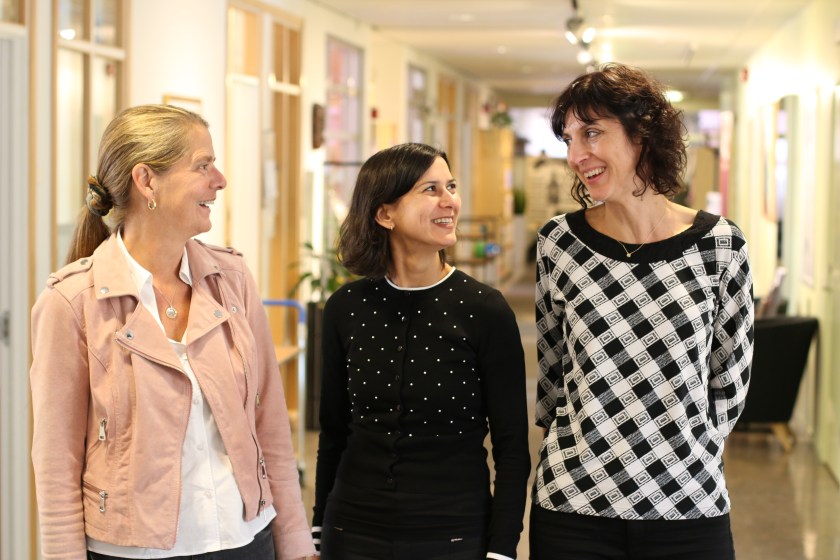
UMC Director Marie Lindquist with Rani Anjum and Elena Rocca. Photo: UMC

At 1 October 2018, a new collaborative research project started at NMBU that brings CauseHealth into its second phase; of CauseHealth pharmacovigilance. Continue reading “New research collaboration between Uppsala Monitoring Centre and CauseHealth”

CAUSAL DISPOSITIONS IN RISK ANALYSIS

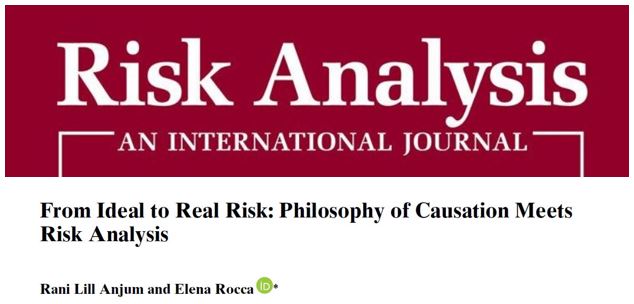
Capture 3Technology should make our life better, easier and safer. And yet, medicines, pesticides, nanotechnologies, biotechnologies et cetera, may represent a potential threat to health and environment. Some of the new technologies might be safe for most, but they could still be harmful for vulnerable individuals, communities or ecosystems. Continue reading “CAUSAL DISPOSITIONS IN RISK ANALYSIS”
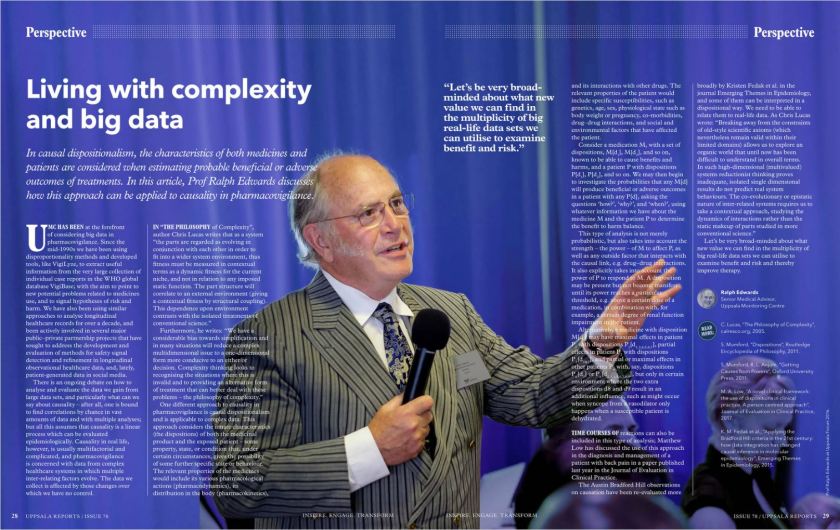
Living with complexity and big data. Causal dispositionalim enters pharmacovigilance

Ralph Edwards on dispositionalism in pharmacovigilance

We have seen a lot of interest in the CauseHealth approach and issues during these last years, especially among clinicians who see a need for a more person centered healthcare. Can this be useful also outside the clinic? Yes, according to senior medical advisor at the WHO Uppsala Monitoring Center for Drug Safety, Ralph Edwards. In a recent perspectives article in the UMC report, he argues that dispositionalism can be useful for dealing with complexity, individual variation and the patient’s unique context. Continue reading “Living with complexity and big data. Causal dispositionalim enters pharmacovigilance”

DATA AND THEORY: NEW CAUSEHEALTH PAPER ABOUT THE PROBLEM OF WEIGHING COMPLEX EVIDENCE IN MEDICINE.

by Elena Rocca

data

In the early 19th century, the Hungarian physician Ignaz Semmelweis noticed from his clinical experience that antiseptic routines in healthcare reduced infections at childbirth. After carrying out some studies on the matter, he proposed that the practice of disinfecting hands in the obstetrician ward of the Vienna General Hospital, where he worked at the time, would have reduced the incidence of puerperal fever. However, for that time this seemed as an implausible suggestion.  The germ theory of disease was still unheard of (Pasteur developed such theory only some decades later), and therefore there was no accepted understanding of how disease could be transmitted from one organism to the other. Semmelweis suggestion was therefore rejected by the medical community. Continue reading “DATA AND THEORY: NEW CAUSEHEALTH PAPER ABOUT THE PROBLEM OF WEIGHING COMPLEX EVIDENCE IN MEDICINE.”

CauseHealth goes to Evidence Live

Evidence-live-2-date

Evidence Live is an annual conference, jointly hosted by the Centre for Evidence-Based Medicine, University of Oxford and The BMJ. This year, CauseHealth was represented in two of the sessions, by Elena Rocca and Rani Lill Anjum. Continue reading “CauseHealth goes to Evidence Live”

Evidence based medicine. What evidence, whose medicine, and on what basis?

girl-2696947_1920

Rani Lill Anjum

The evidence-based medicine movement was intended as a methodological revolution. Its proponents suggested the best way to establish the effectiveness of treatment and new criteria to choose between available treatments without bias. Philosophically, however, these changes were not so innocent, at least not ontologically speaking. In bringing itself closer to science, medicine has become less suitable for dealing with complex illnesses, individual variations and, as I will argue, with causation in general. Continue reading “Evidence based medicine. What evidence, whose medicine, and on what basis?”

Capturing the Colour: Classification and its Consequences

Author Eivind Hasvik
(#5 in the Whole Person reflections series)

Gazing through my window, I’m enriched by a muted but beautiful December twilight-palette. The remains of autumn covered by a thin layer of snow. It’s said that every culture has its own sense of the different hues. I’m reading a beautiful passage in White by Kenya Hara about the traditional Japanese way of naming colours. Contrary to the modern way of categorizing a given spectrum of light, such as greens, magentas or yellows, it’s said that red, blue, white and black were the only basic colour adjectives in 8th century Japan. The tradition was not to classify, but to describe and texturize, capturing the seasons and surroundings. This narrative heritage is beautifully documented in the book The traditional colours of Japan.

I’m imagining a metaphorical link from all this to the difficulties of describing experience—sensations, emotions, pain or pleasure. Continue reading “Capturing the Colour: Classification and its Consequences”