

 Technology should make our life better, easier and safer. And yet, medicines, pesticides, nanotechnologies, biotechnologies et cetera, may represent a potential threat to health and environment. Some of the new technologies might be safe for most, but they could still be harmful for vulnerable individuals, communities or ecosystems. Continue reading “CAUSAL DISPOSITIONS IN RISK ANALYSIS”
Category: Philosophy
DATA AND THEORY: NEW CAUSEHEALTH PAPER ABOUT THE PROBLEM OF WEIGHING COMPLEX EVIDENCE IN MEDICINE.
by Elena Rocca

In the early 19th century, the Hungarian physician Ignaz Semmelweis noticed from his clinical experience that antiseptic routines in healthcare reduced infections at childbirth. After carrying out some studies on the matter, he proposed that the practice of disinfecting hands in the obstetrician ward of the Vienna General Hospital, where he worked at the time, would have reduced the incidence of puerperal fever. However, for that time this seemed as an implausible suggestion. The germ theory of disease was still unheard of (Pasteur developed such theory only some decades later), and therefore there was no accepted understanding of how disease could be transmitted from one organism to the other. Semmelweis suggestion was therefore rejected by the medical community. Continue reading “DATA AND THEORY: NEW CAUSEHEALTH PAPER ABOUT THE PROBLEM OF WEIGHING COMPLEX EVIDENCE IN MEDICINE.”
CauseHealth goes to Evidence Live

Evidence Live is an annual conference, jointly hosted by the Centre for Evidence-Based Medicine, University of Oxford and The BMJ. This year, CauseHealth was represented in two of the sessions, by Elena Rocca and Rani Lill Anjum. Continue reading “CauseHealth goes to Evidence Live”
Evidence based medicine. What evidence, whose medicine, and on what basis?

Rani Lill Anjum
The evidence-based medicine movement was intended as a methodological revolution. Its proponents suggested the best way to establish the effectiveness of treatment and new criteria to choose between available treatments without bias. Philosophically, however, these changes were not so innocent, at least not ontologically speaking. In bringing itself closer to science, medicine has become less suitable for dealing with complex illnesses, individual variations and, as I will argue, with causation in general. Continue reading “Evidence based medicine. What evidence, whose medicine, and on what basis?”
What is the Guidelines Challenge?


CauseHealth recently organised a conference in Oxford called The Guidelines Challenge: Philosophy, Practice, Policy.
For those who missed the event, podcasts of the talks are available on our YouTube channel, and there is also a summary from each of the two days on Storify (day 1, day 2). There is also a Twitter hashtag, #GuidelinesChallenge.
Continue reading “What is the Guidelines Challenge?”
New CauseHealth paper about risk assessment of genetically modified plants

by Elena Rocca
One idea promoted by CauseHealth is that, when evaluating evidence, pre-existing theoretical frameworks count as much as the data. For instance, data from a certain trial assume a particular significance depending on the general background theoretical understanding we have when we interpret them. In this new CauseHealth article, Elena Rocca and Fredrik Andersen show that, when evaluating health risks related to the use of genetically modified plants in agriculture, different ontological starting points play an essential role for the final risk evaluation. Continue reading “New CauseHealth paper about risk assessment of genetically modified plants”
What does CauseHealth mean by N=1?
by Roger Kerry
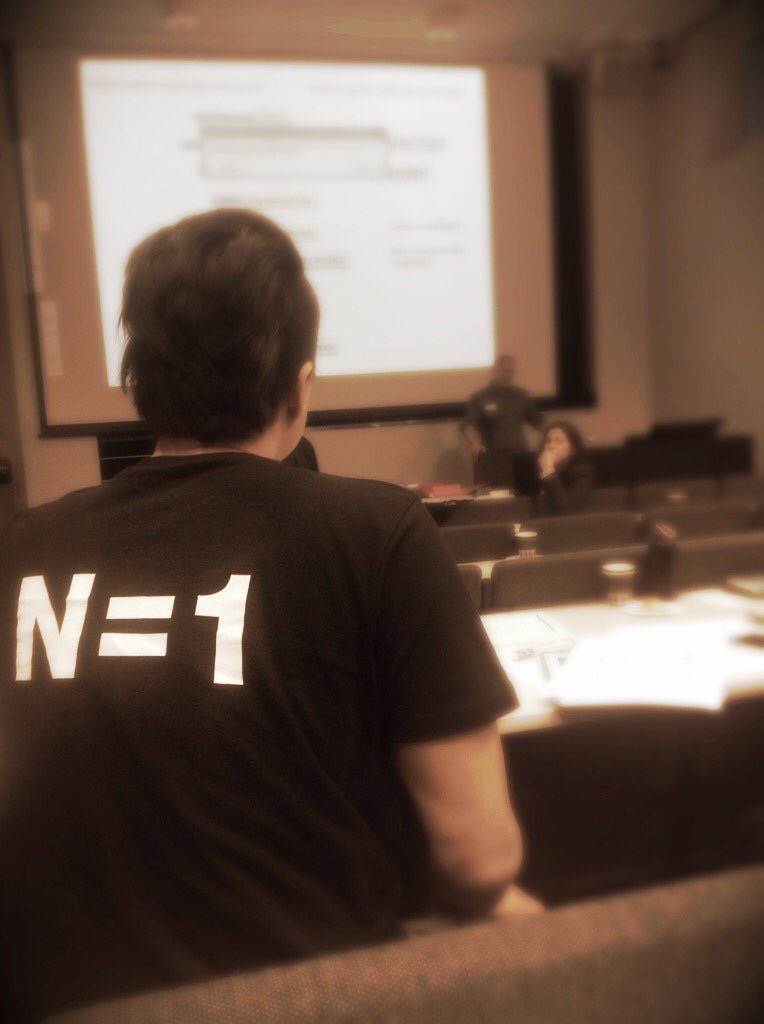
“N=1” is a slogan used to publicise a core purpose of the CauseHealth project. N=1 refers to a project which is focussed on understanding causally important variables which may exist at an individual level, but which are not necessarily represented or understood through scientific inquiry at a population level. There is an assumption that causal variables are essentially context-sensitive, and as such although population data may by symptomatic of causal association, they do not constitute causation. The project seeks to develop existing scientific methods to try and better understand individual variations. In this sense, N=1 has nothing at all to do with acquiescing to “what the patient wants”, or any other similar fabricated straw-man characterisations of the notion which might emerge during discussions about this notion. Continue reading “What does CauseHealth mean by N=1?”
Map versus terrain?
When discussing the potentials and limitations of “Evidence Based Medicine”, it might be reasonable to begin by examining the premises inherent in the concept. It might be wise to question, for example, whether the use of the word “Evidence” in this model represents an improper appropriation of the term, as if it had a single, specific meaning. One might object: “What is evident? Well, that depends.” Continue reading “Map versus terrain?”
MORE ON SYMPTOMS
by Stephen Tyreman, Better Evidence for a Better Healthcare Manifesto
Most healthcare professions claim to seek and treat the causes rather than the symptoms of disease. This started as a reaction to the medicine of the nineteenth century, which was still influenced by Humoral Theory and Paracelsus. Treatments were given to counter the symptoms patients were experiencing. Unfortunately, many of the heroic purgative and cathartic potions given, such as calomel, arsenic, mercury and opium, were more harmful than the diseases they were treating. It led Hahnemann, for example, to develop homoeopathy on the opposite principle that substances that caused similar symptoms to the condition and given in small doses were more effective – but that’s another debate. The focus today, apart, perhaps, from in palliative care, is on treating the cause, bypassing symptoms per se, or using them as monitors of healing. Continue reading “MORE ON SYMPTOMS”
ARE WE SATISFIED WITH TREATING THE MERE SYMPTOMS OF MEDICALLY UNEXPLAINED SYNDROMES?
by Karin Mohn Engebretsen, Better Evidence for a Better Healthcare Manifesto
As a Gestalt psychotherapist, I have seen an increasing number of individuals over the last fifteen years that experience themselves as burned out. This fact has triggered my interest to explore the phenomenon further. Burnout is a medically unexplained syndrome (MUS). As with other MUS, there is a tendency to assume a narrow perspective to focus on problems related to psyche or soma as pathologies located exclusively within the patient. Research has mainly looked for clear-cut one-to-one relations between cause and effect. These relationships are however difficult to find in complex syndromes. Continue reading “ARE WE SATISFIED WITH TREATING THE MERE SYMPTOMS OF MEDICALLY UNEXPLAINED SYNDROMES?”
 Causality, Complexity and Evidence in Health Sciences