Thinking about guidelines

clock-lion
National Geographic Wild, Trafalgar Square in London, January 28, 2016.

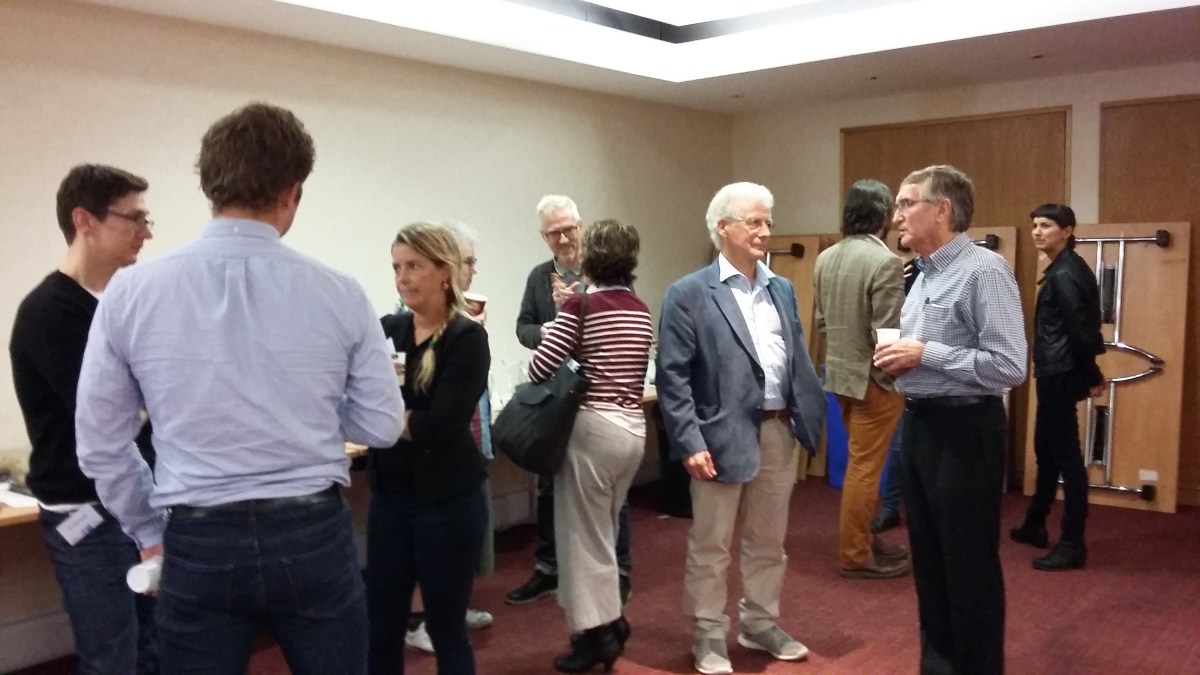
On October 24, 2016, the CauseHealth crowd met with a small group of other philosophers, healthcare practitioners, and members of the guidelines community. We had a rousing discussion that lasted the whole day, with few pauses and enthusiastic participation from all in attendance. We talked about several issues with how guidelines are developed and implemented and how we thought philosophy could be relevant in solving those issues.

It is difficult to summarize the discussion in a few words—the topics were wide-ranging and participants shared complex ideas from multiple perspectives. I’m going to highlight here some of the themes that came up more than once, and to give an idea of where the group thought the discussion should go next.

Read more of Samantha’s review of the workshop
Read Rani on Real v. Ideal Guidelines
Read Elena on How Decisions are Made
Read Karin on the Ethics of Reduction
Read Stephen on the Notion of Guideline
Read Roger on the Challenges to Come
Read Fiona on Guidelines in Situ
Read Sarah on Truth, Simplicity and Personalization
Read Anna Luise on Challenging Multi-Morbidity
Read Stephen on Standards for Regulation
Read Samantha on Analogies and High-Stakes Inferences
Continue reading “Thinking about guidelines”
The Person-Centred Care of Medically Unexplained Symptoms – a revolution is afoot

Another great summary of one of our events by @osteofm! So glad she could attend and give such a fab review 🙂 (pssst check out her blog, there are other great posts there)

osteofm's avatarosteofm

A one day symposium, at St George’s, University of London, 28 September 2016. 

A collaboration between the European Society for Person Centered Healthcare, and the CauseHealth Project.

OK.  Take a deep breath.  I just did.  Because on opening my notebook to begin trying to make sense of this amazing one-day Symposium in London, I have discovered that I took 32 pages of notes.  And I didn’t even get everything down.  Yes it was packed with intellectual stimulation,  organized by the exciting CauseHealth people, in collaboration with the ESPCH, who are all very brainy and who are exploring a field so fascinating, far-reaching and multi-layered that it’s not easy to even define.  There was politics, philosophy, taxonomy, research, education, neurology, psychology, croissants.  What’s not to like?  So prepare yourself.  As blogs go, this is a long one.

Andrew Miles– (please forgive the absence of titles and letters for…

View original post 3,338 more words

New CauseHealth publication about risk assessment of drugs.

Capture


In Bridging the Boundaries Between Scientists and Clinicians, Elena Rocca explores the field of drug risk assessment as an example of strict interdependence between basic biomedical research, clinical research, and clinical evaluation and shows how it would benefit from a closer collaboration between scientists and clinicians. Continue reading “New CauseHealth publication about risk assessment of drugs.”

Reductionism isn’t enough for public health

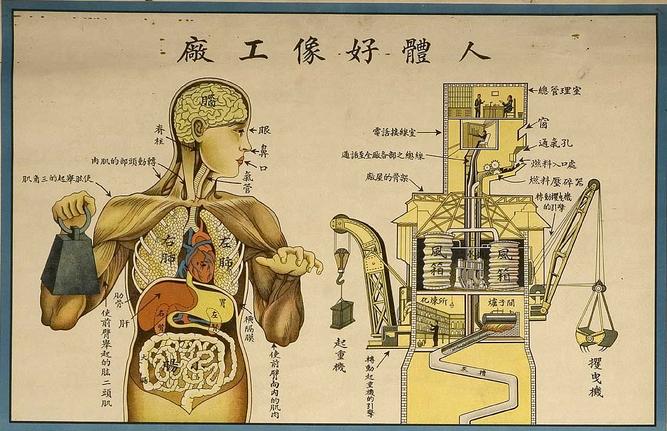
humanmachine2
Chinese medical poster, 1933 (ref US NLM; image source here)

By Håkon Boman Andresen

The overarching goal of the public health sciences is to increase the population’s health. Society spends a lot of money each year on health research, which again is used to develop public policies and guidelines. However, is this causing the population to have better health? Continue reading “Reductionism isn’t enough for public health”

New article by CauseHealth collaborator Roger Kerry

Capture

by Elena Rocca

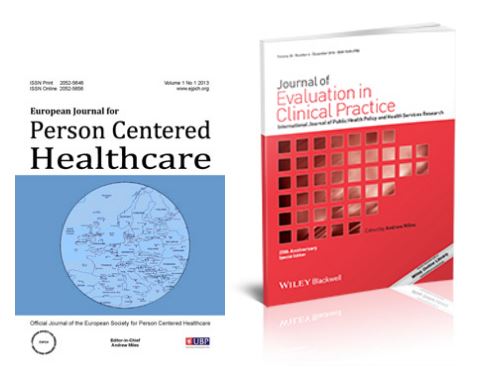
Our friend and collaborator Roger Kerry co-authored the article “Time, space and form: Necessary for causation in health, disease and intervention?” published in this month’s issue of the journal Medicine, Health Care and Philosophy. Continue reading “New article by CauseHealth collaborator Roger Kerry”

#CauseHealthPT Holds Court: The Beginning of The Beginning

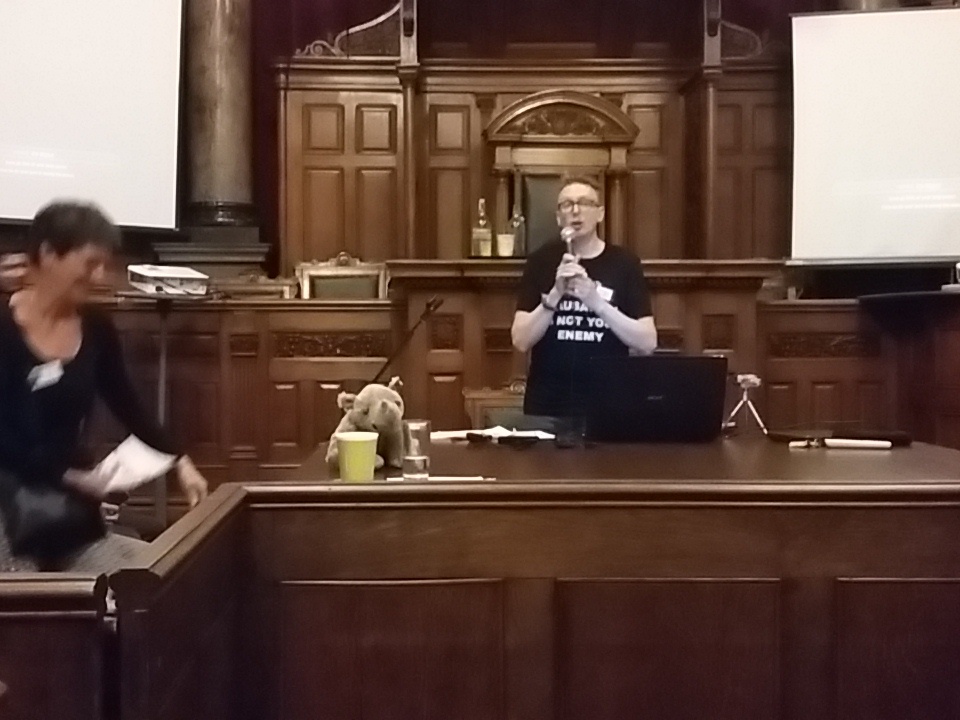
DSC_0127[1]

By Roger Kerry

How and why has this philosophy project got itself so involved with physiotherapy? The background to the CauseHealth project is essentially that the world of health care is not straightforward, and indeed is characterised by complexity and context-sensitivity. Physiotherapy is a profession where these characteristics are easily visible, and so serves as a great ‘testing ground’ for the philosophical work being done by CauseHealth. This in turn helps the project better understand its ideas. In doing this, physiotherapy itself gets a deep and critical understanding of the job it does, and of the scientific research which informs it. We are now symbiotic! Continue reading “#CauseHealthPT Holds Court: The Beginning of The Beginning”

Are physiotherapists the new philosophers? CauseHealth 2016

Reflections from the CauseHealth Physio conference in Nottingham in May, guest blog.

osteofm's avatarosteofm

260 Here’s where it happened: The Galleries of Justice Museum, in the trendy Lace Market area of Nottingham

I can’t remember why I raced to book a ticket to the CauseHealth Conference in Nottingham in May.  It might have been because it only cost £35 (lunch included!), it might have been because lots of keen-minded people I follow on twitter were excited about it (sports physio Adam Meakins, Neil Maltby, Chews Health…), it might be because the word philosophy excites my brain, but whatever the reasons I found myself walking into an old wood-panelled courtroom, (usually a museum) in Nottingham’s Lace Market, not having a clue what it was going to be about.  All I knew was that I suspected it was at the cutting edge of health care, particularly for manual therapists.  And I was right.  It was intense, it was highly learned, it was powerful and I couldn’t take…

View original post 1,812 more words

Why do we care about the foundations of evidence-based medicine (“EBM”)?

1280px-Lotyšské_etnografické_muzeum_v_přírodě_(91)
Photo via Latvian Ethnographic Open Air Museum

by Samantha Copeland

CauseHealth has been pushing buttons all over the place, lately, as we pursue our goal of critiquing current frameworks in EBM by proposing some deep questions about its ontology*. We aren’t the only ones—at recent events, we have found people from various communities in medicine are ready and willing to raise and engage some tough questions, about what evidence is and how it might best be used. Reflecting on two recent events we attended, in this blog post I want to think a little bit about the relationship between understanding the foundations of EBM, and putting the ideals of EBM to work for us in medical practice. Continue reading “Why do we care about the foundations of evidence-based medicine (“EBM”)?”

PhD thesis on serendipity wins award

Samantha Marie Copeland

Philosopher and CauseHealth Postdoc, Samantha Copeland, has won one of two Best Thesis Awards from Dalhousie University for her doctoral thesis The Case of the Triggered Memory: Serendipitous Discovery and the Ethics of Clinical Research. She has also been selected as their nominee for the Canadian Association for Graduate Studies Distinguished Dissertation Award in Fine Arts, Humanities and Social Sciences for 2016. Congratulations! Read more about her work on serendipity and get the full text version of the thesis.